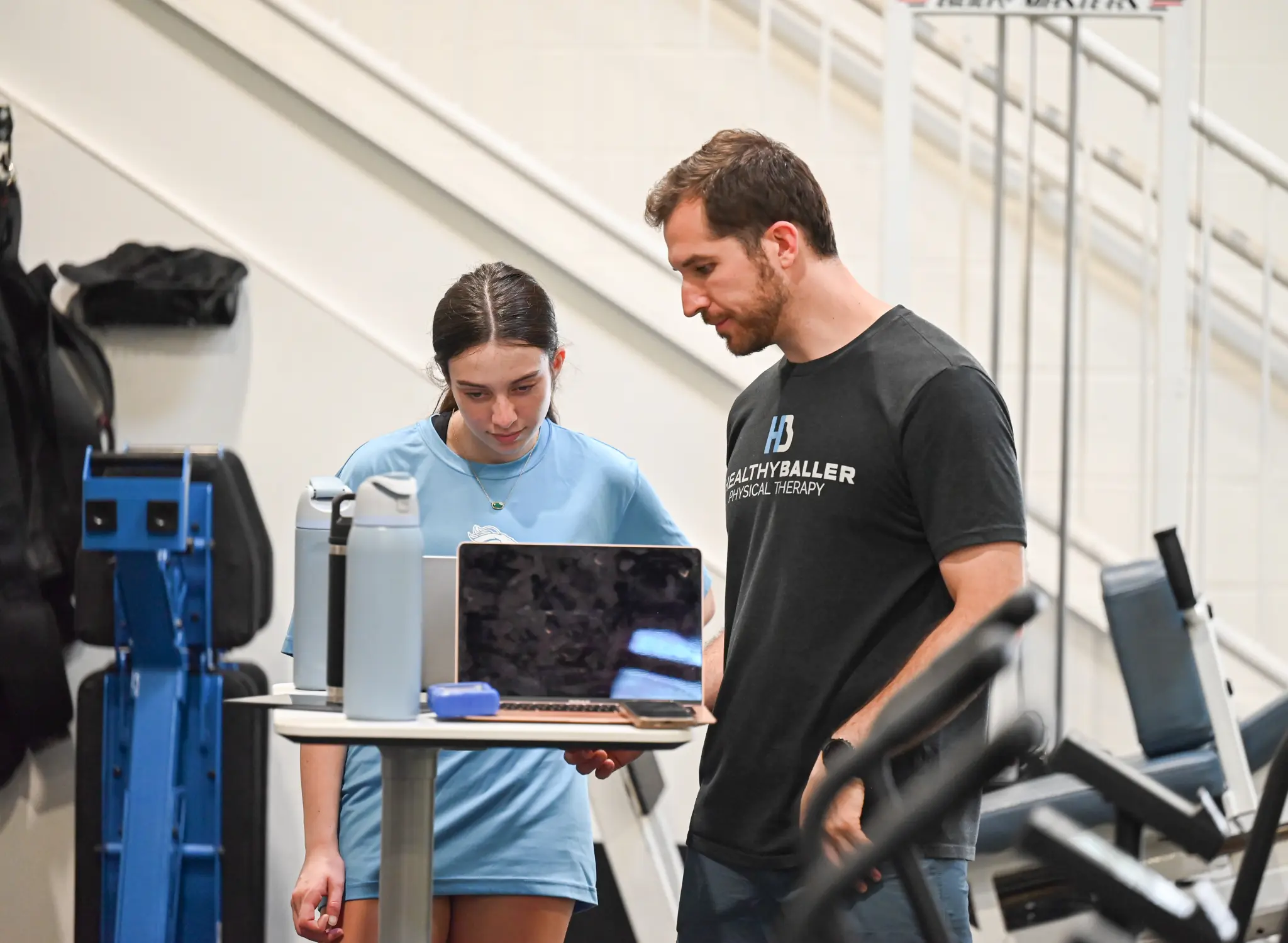
By the middle of a season, the excitement of tryouts has likely worn off and the grind has set in. Fall athletes are deep into back-to-back games. Winter athletes are adding pre-season workouts on top of club commitments. And with midterms, late nights, and weekend tournaments in the mix, many young athletes are running on less than they realize.
At Healthy Baller, this is the point in the year when our coaches pay very close attention. Many of them competed at a high level themselves, and they know from experience that the athletes who finish the season strongest often aren’t the ones who did the most. They’re the ones who matched their training to their recovery.
Here’s what the research says about mid-season fatigue, the warning signs to watch for, and what to do when your athlete is overdoing it.
Fatigue Isn’t the Enemy. Unmanaged Fatigue Is.
Feeling tired after hard training is normal, and necessary. Training works by stressing the body, then letting it recover and adapt to a higher level. Problems start when the stress keeps coming and recovery doesn’t catch up.
The joint consensus statement on overtraining from the European College of Sport Science and the American College of Sports Medicine describes this as a continuum:
- Functional overreaching: a short-term dip in performance that resolves within days to a couple of weeks, often followed by improvement. This is productive training.
- Non-functional overreaching: performance stalls or declines for weeks to months, usually with psychological symptoms. There’s no performance payoff here.
- Overtraining syndrome: a prolonged state of maladaptation that can take months, or longer, to recover from.
The goal of good mid-season programming is to keep athletes in the first category and catch the warning signs before they slide into the second.
Why Mid-Season Is the Danger Zone
Fatigue rarely comes from one brutal session. It builds up. A few weeks of games, practices, private lessons, and school stress stack up until the body can’t keep up.
Youth athletes are especially vulnerable. The American Academy of Pediatrics’ 2024 clinical report on overuse injuries, overtraining, and burnout identifies excessive training volume, playing on multiple teams at once, and year-round participation as key risk factors. It also notes that roughly 70% of kids drop out of organized sports by age 13.
The research gives parents two simple guardrails. A Loyola University clinical study published in the American Journal of Sports Medicine found that young athletes who spent more hours per week in organized sport than their age in years had about twice the odds of a serious overuse injury. Athletes whose organized sport time was more than double their free play time were at similar elevated risk. For a 14-year-old playing high school ball for example and club at the same time, that 14-hour line comes up faster than most families expect.
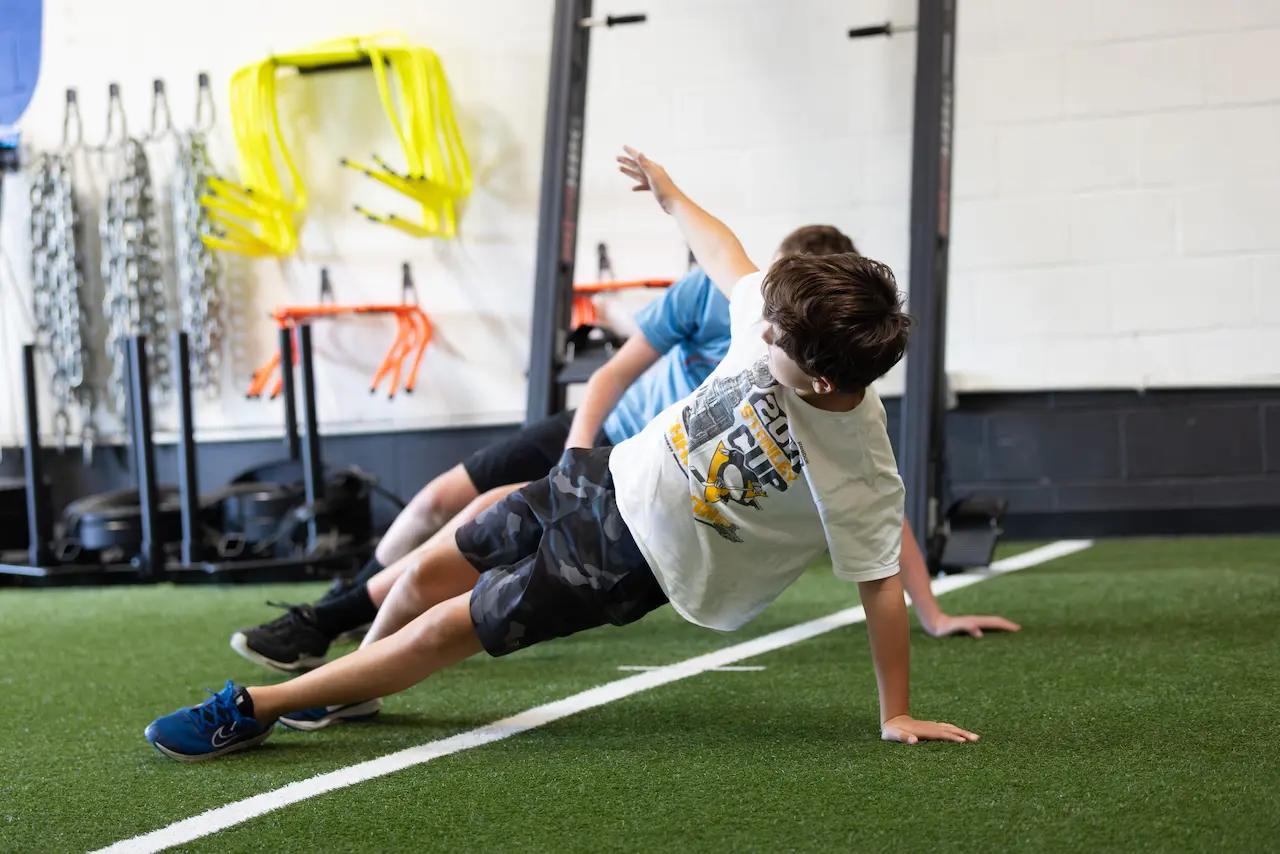
The Warning Signs Your Athlete Is Overdoing It
Overtraining doesn’t look the same in every athlete, but the signs tend to fall into three groups. Watch for clusters of symptoms that last more than a few days, not a single bad practice.
1. Physical Signs
- Persistent soreness or heavy legs that don’t clear after a rest day
- Nagging aches in the same spot, especially shins, knees, heels, lower back, or shoulders
- Getting sick more often, or colds that won’t go away
- Elevated resting heart rate in the morning
2. Performance Signs
- Slower sprint times, lower vertical jump, or less explosiveness
- Sloppy technique, poor decision-making, or more mental errors late in games
- Workouts that used to feel manageable now feel exhausting
3. Emotional and Behavioral Signs
- Irritability, moodiness, or a short fuse at home
- Trouble falling or staying asleep, despite feeling exhausted
- Loss of appetite
- Losing interest in a sport they used to love, or dreading practice
That last group matters more than many people think. The AAP lists persistent fatigue, impaired sleep, mood changes, and declining performance among the clearest indicators of overtraining and burnout.
The Best Monitoring Tool Is Asking the Right Questions
Wearables and lab tests get a lot of attention, but the research points to something simpler. A systematic review in the British Journal of Sports Medicine analyzed 56 studies and found that athletes’ own reports of mood, stress, fatigue, and recovery responded to training load more sensitively and consistently than common objective markers like blood tests and heart rate.
In practice, a 30-second daily check-in works. Ask your athlete to rate their sleep, soreness, energy, stress, and mood on a scale of 1 to 5. One low day means nothing. A downward trend across a week is a signal to adjust.
At Healthy Baller, we pair these conversations with objective data. Our force plate testing measures how athletes produce force during jumps and squats. Research on the countermovement jump shows that tracking these jump metrics over time is a reliable way to spot neuromuscular fatigue, often before the athlete feels it.
Two Hidden Drivers: Sleep and Fuel
When an athlete looks overtrained, the cause is often what happens outside the gym.
Sleep
A study in the Journal of Pediatric Orthopaedics found that adolescent athletes who slept fewer than eight hours a night were 1.7 times more likely to have been injured than those who slept eight hours or more. Mid-season, when homework and late games eat into the night, sleep is usually the first thing to slip.
Fuel
Many athletes who seem to be “training too hard” are actually eating too little for the work they’re doing. The 2023 International Olympic Committee consensus statement on Relative Energy Deficiency in Sport (REDs) links chronic under-fueling to fatigue, recurrent injuries, bone stress injuries, hormonal disruption, and declining performance, in both male and female athletes. If fatigue persists despite reasonable training loads, nutrition is one of the first places to look. As we’ve discussed before, working with a registered dietitian can turn general guidelines into a plan that matches an athlete’s actual demands.
What to Do When You See the Signs of Fatigue
The answer is rarely to stop training completely. As sports scientist Tim Gabbett’s widely cited work on the training–injury prevention paradox shows, well-managed training builds resilience. Big spikes in load are what drive injury risk. The fix is to manage the load, not remove it.
- Lower the volume, keep some intensity. Fewer sets and shorter sessions maintain strength and speed while giving the body room to recover. We take the same approach before tryouts in our post on being prepared, not exhausted.
- Protect at least one full rest day each week. Real rest, not a “light” extra skills session.
- Audit the whole calendar. Add up team practices, games, club, lessons, and training. If the total exceeds your athlete’s age in hours, something needs to give.
- Communicate across coaches. Make sure your school coach, club coach, and performance coach all know the full picture.
- Know when to see a professional. Pain that changes how your athlete moves, localized bone pain, or fatigue that lasts more than two weeks despite rest warrants a visit to a sports medicine physician.
Smart In-Season Training Keeps Athletes Fresh
The athletes who hold up best in the second half of a season usually haven’t stopped training. They’ve trained smarter. As we explain in the importance of in-season training, one to two well-designed sessions a week, adjusted for minutes played, injury history, and outside stress, help athletes keep the strength and resilience they built in the off-season. It’s one of the most effective ways to reduce sports injuries in young athletes.
That’s the work our coaches do every day. With private, semi-private, and group training across our Alexandria, Fairfax, Reston, Rockville, and DC locations, we monitor how each athlete is responding and adjust their program, so they peak when it matters instead of fading.
Reach Out Today
If your athlete is dragging through the middle of the season, don’t wait for an injury to force a break. Stop by one of our DC, Maryland, or Virginia training centers, or reach out to our team, and let’s build a plan that keeps them strong through the final whistle.