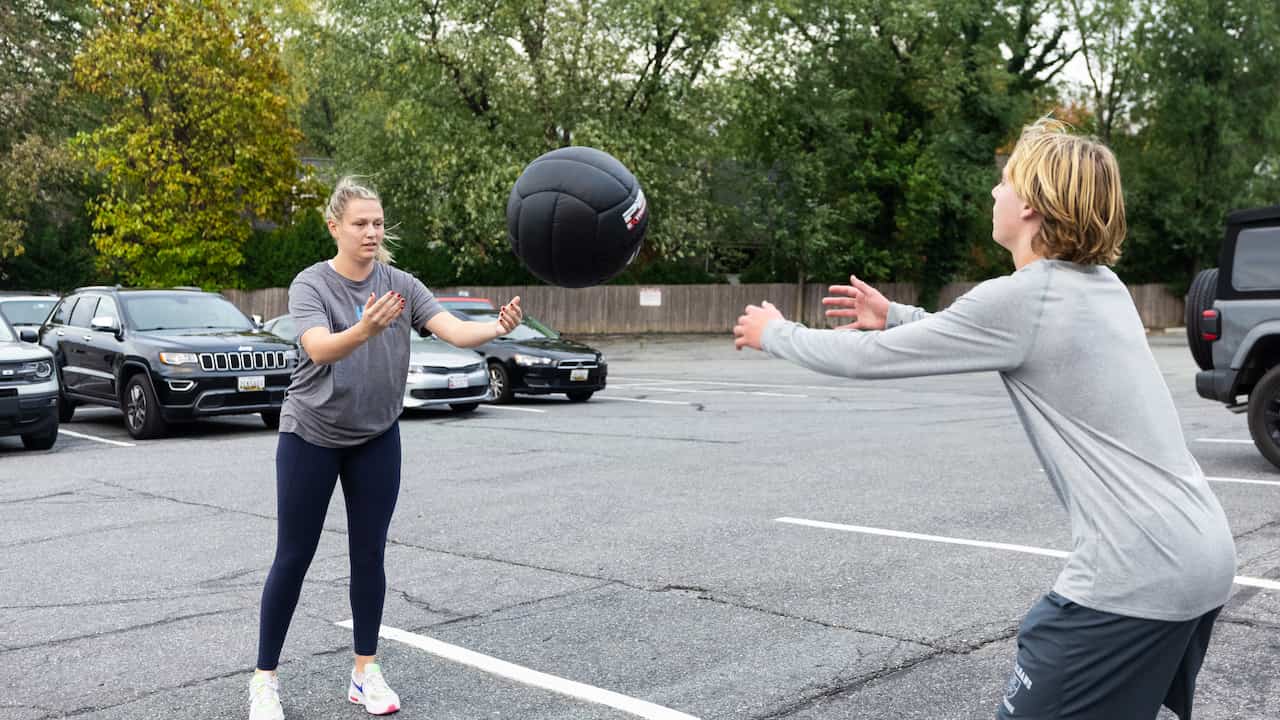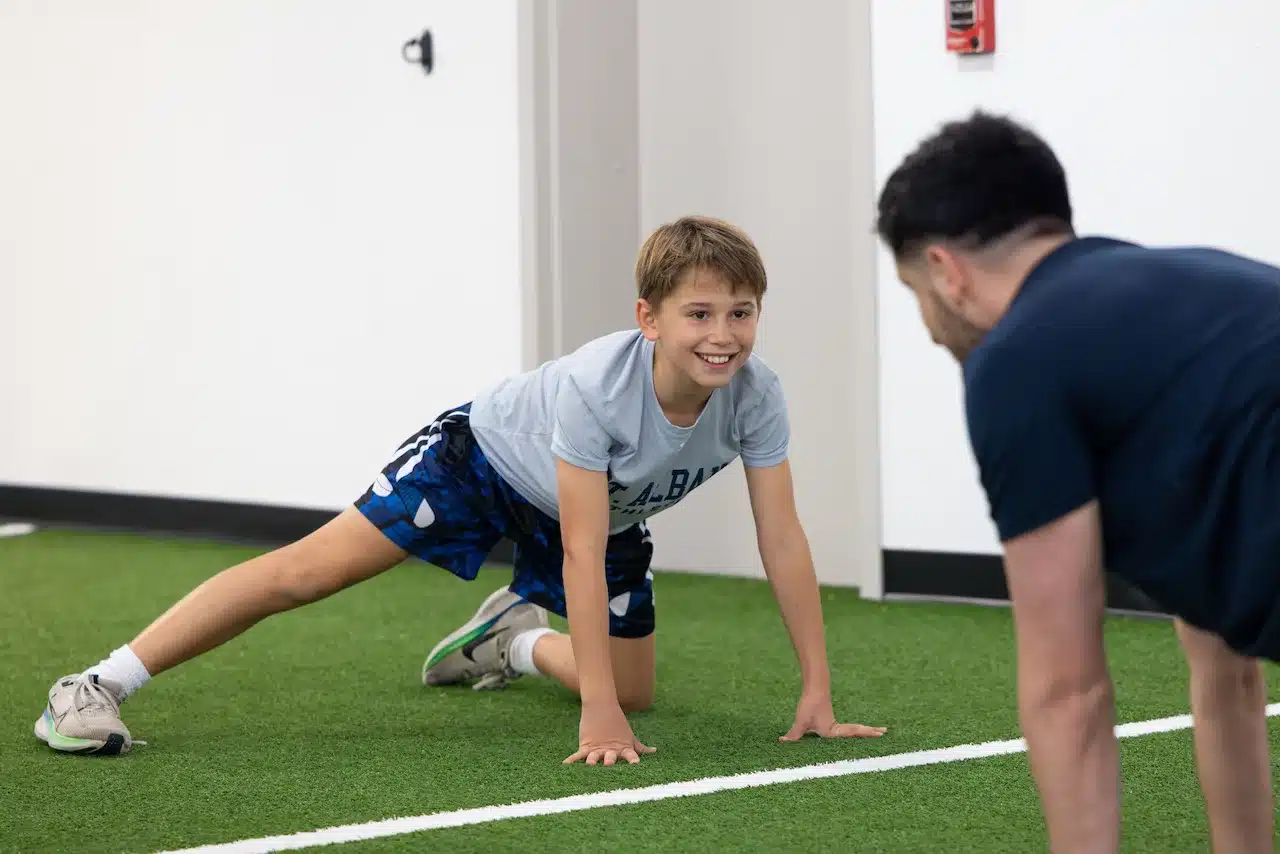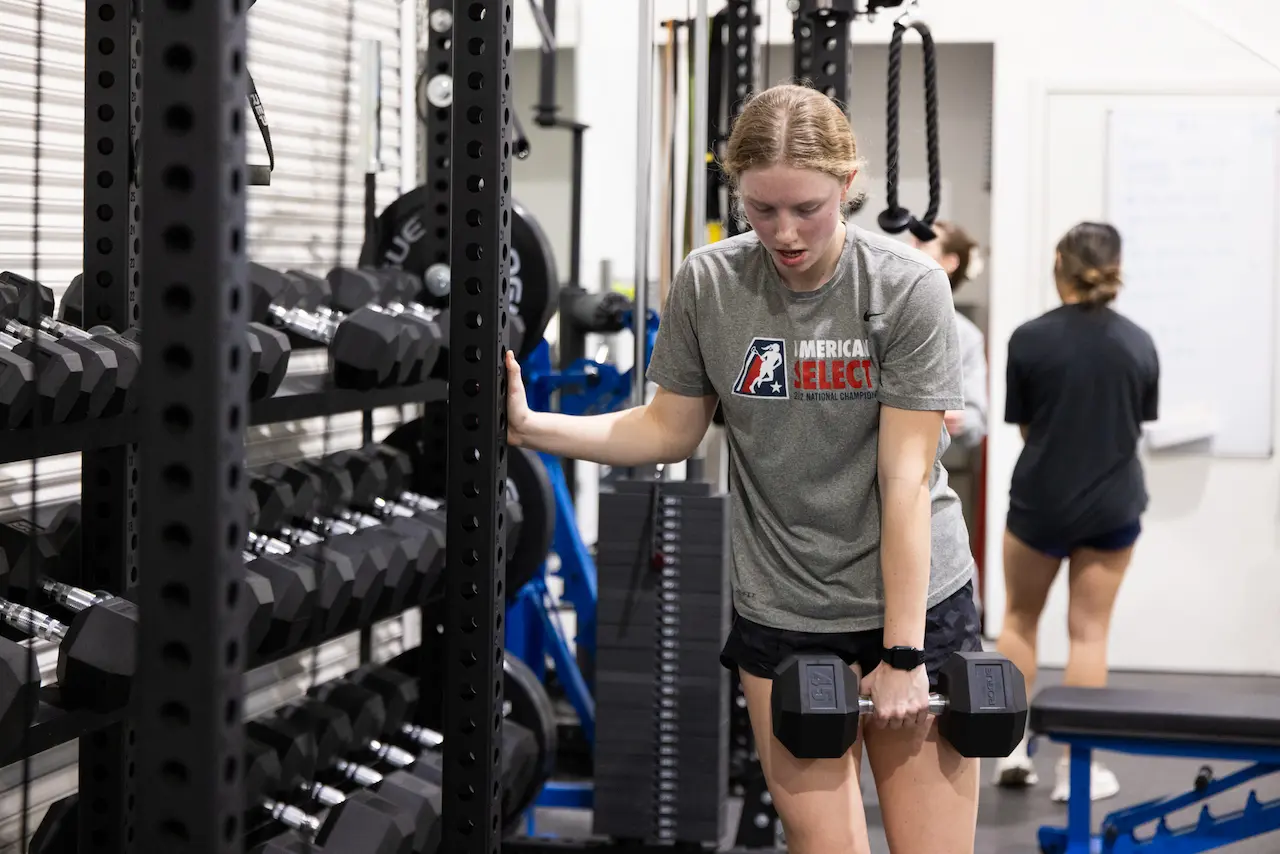
For most families around the country, the last week of August means two things are happening at once: the school year is starting, and pre-season is ramping up. Homework, carpool lines, club meetings, and multiple practice schedules all land in the same two-week window – and something usually gets squeezed. Too often, it’s training.
At Healthy Baller, we see this every year. Athletes come in fresh off summer break, school just started, and their pre-season window suddenly feels impossibly small. The good news is that building an effective pre-season routine around a packed back-to-school calendar isn’t about finding more hours in the day. It’s about being intentional with the hours you already have.
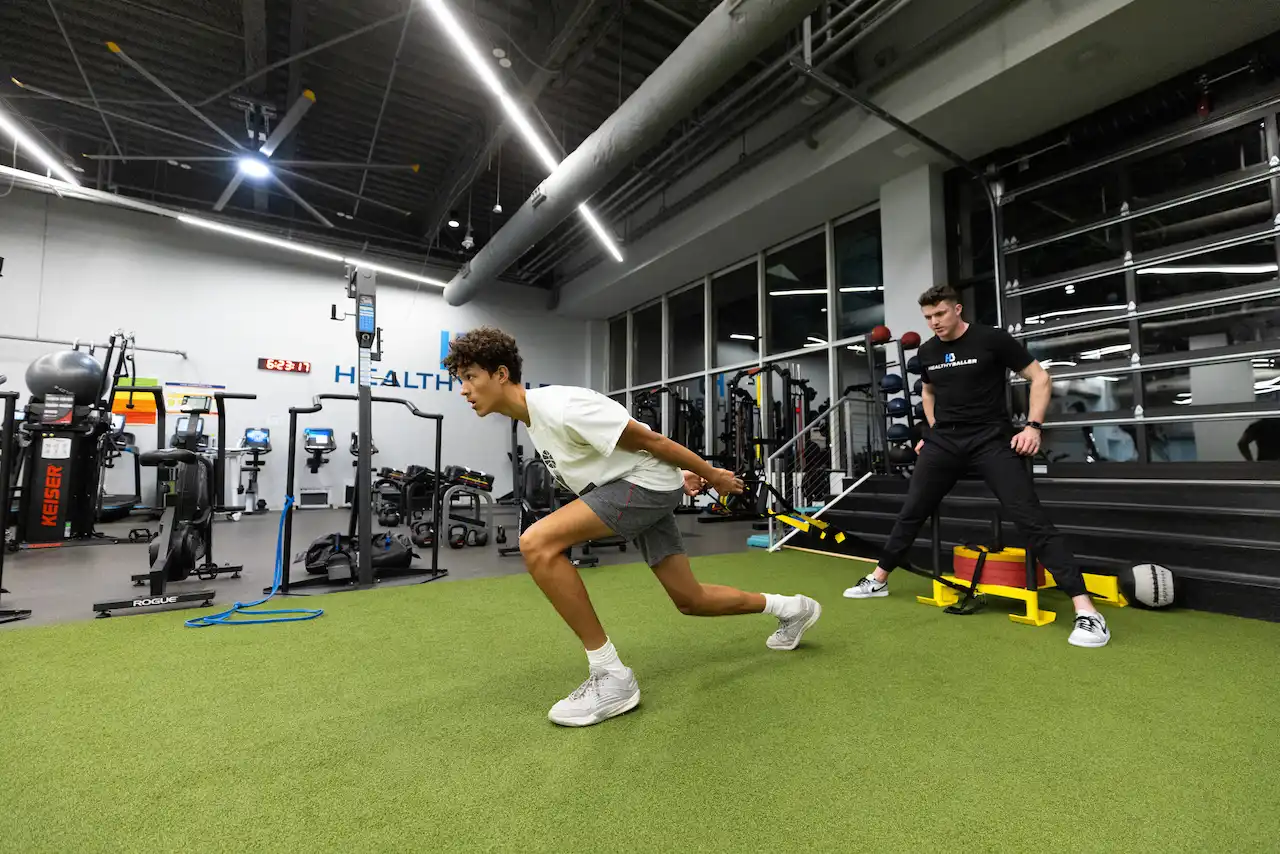
Why Pre-Season Prep Still Matters, Even When Time Is Tight
It’s tempting, when the schedule gets chaotic, to skip the ramp-up and let the first few weeks of practice serve a dual purpose as both skills training and conditioning.
This is exactly the pattern sports science research warns against. Studies on training load consistently show that athletes who spike their activity level too quickly after a period of lower activity – jumping straight from a light summer into full-intensity practices – face a meaningfully higher risk of injury than athletes who build up gradually.
Research on the acute: chronic workload ratio (comparing an athlete’s most recent week of training to their rolling average over the past month) has found that a ratio below 1.0 is associated with lower injury occurrence, while ratios above 1.5 – the kind of jump that happens when a student athlete goes from zero structured training in August to five practices a week in September – are associated with a clear increase in injury rate.
It’s not a coincidence that August and early September are consistently flagged as one of the highest-risk windows of the year for young athletes, both for soft-tissue injuries and for heat-related illness. A short, structured pre-season block – even just two to three weeks of progressively loaded training – is one of the most effective tools we have for keeping athletes healthy once the real season starts.
Sleep Is Non-Negotiable
When schedules get tight, sleep is usually the first thing to go – and it’s the first thing we ask families to protect. Teen athletes need 8 to 10 hours of sleep per night, and school-age children need even more, yet research suggests over 40% of student athletes regularly experience poor sleep quality once the school year starts.
The consequences aren’t just about feeling tired. Student athletes getting less than eight hours of sleep a night have been shown to be roughly 1.7 times more likely to sustain an injury during training or competition. On the performance side, a well-known Stanford study on collegiate basketball players found that extending sleep to 10 hours a night produced measurable improvements in sprint times, reaction time, and shooting accuracy within just a few weeks.
In other words: a late-August bedtime that slips because of homework, screens, or a packed evening schedule isn’t a small tradeoff. It’s one of the highest-leverage variables in whether pre-season training actually pays off.
Build the Routine Around Fixed Anchors, Not Perfect Days
Most back-to-school schedules don’t have a lot of flexible, wide-open blocks – but they usually do have a few fixed anchors: the same three afternoons free each week, a consistent weekend morning, a predictable window between school pickup and dinner. The most sustainable pre-season routines are built around those anchors rather than around an idealized schedule that assumes unlimited time.
This is where our coaches lean on their own experience as former competitive athletes – many of them navigated exactly this juggle themselves.
A few principles we build into every back-to-school pre-season plan:
- Shorter, more frequent beats longer and rare. Three focused sessions a week will do more for an athlete’s readiness than one exhausting two-hour session squeezed in on a Saturday.
- Protect one weekend session as the “anchor” workout. With school-week evenings unpredictable, a consistent weekend block becomes the backbone of the week’s programming.
- Layer conditioning into what’s already happening. Strength and movement-prep work can often be built around existing practice times rather than added as a separate commitment.
- Reassess weekly, not daily. A missed Tuesday shouldn’t derail the plan – what matters is the pattern across the week, not any single session.
Fuel the Gap Between School and Practice
The stretch between the final school bell and the start of practice is often the most nutritionally neglected part of an athlete’s day – and it’s exactly when the body needs fuel most. Arriving at practice running on vending-machine snacks or an empty stomach undercuts even the best-designed training block. A simple combination of carbohydrates and protein in the 60-90 minutes before training – fruit and a protein source, a smoothie, or a basic sandwich – supports both performance in that session and recovery afterward. It doesn’t need to be complicated to be effective; it just needs to be consistent.
Let a Coach Build the Plan So You Don’t Have To
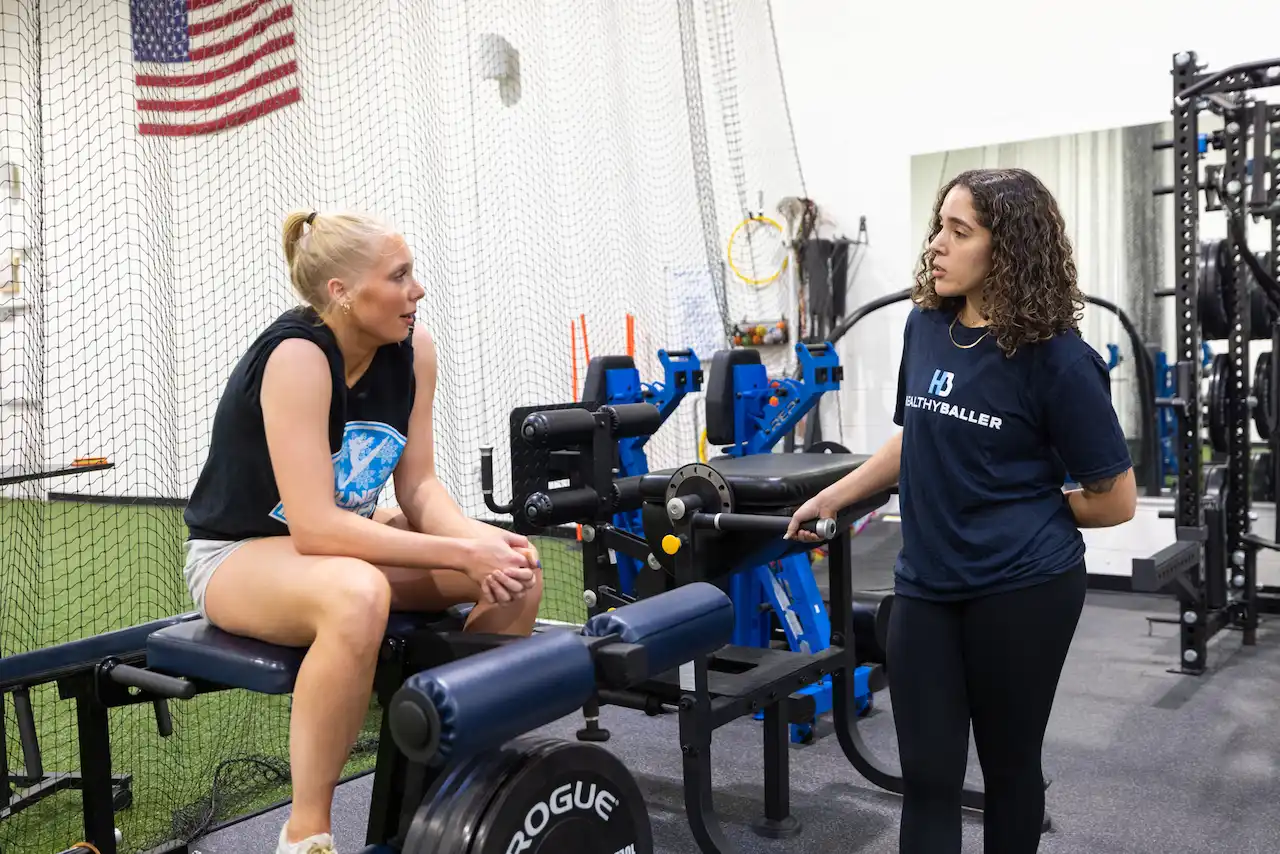
The families who navigate this transition most smoothly usually aren’t the ones with the most free time – they’re the ones with a plan built by someone who understands both the sport-specific demands ahead and the real constraints of a school-year calendar. This is the role our coaches play at Healthy Baller. Because many of them competed at a high level themselves, they know firsthand what a realistic pre-season looks like when school, homework, and family life are all competing for the same hours.
With one-on-one, semi-private, and group training formats across our Alexandria, Fairfax, Reston, Rockville, and DC locations, we build pre-season programs that flex around each athlete’s actual schedule rather than asking families to build their schedule around training.
Reach Out To Us
If your athlete’s pre-season is colliding with a busy back-to-school calendar, our coaches can help you build a routine that fits – one that keeps them healthy, well-rested, and ready when the season officially begins.
Stop by one of our DC, Maryland, or Virginia training centers, or reach out to our team to get started.