If you are new to lacrosse and you’re searching for lacrosse lessons for beginners that deliver results fast, you’re in the right place. At Healthy Baller, we believe learning lacrosse isn’t just about mastering stick skills or scoring goals. It’s about building skills, movement quality, and the kind of confidence that carries into games, school, and life in general.
Come for the Training. Stay for the Fun.
And yes – it’s fun too. From high-energy drills to game-like challenges, our sessions are designed to keep beginners engaged and enjoying the process. Our motto is: “Work hard. Have fun. Get results.” That is what keeps young athletes coming back – not just for the training, but for the environment.
In this blog, we’ll walk through essential beginner lacrosse drills, explain how they build both skill and self‑belief, and show how our approach supports young athletes from the first scoop to their first win.
1. Why Starting Right Matters
Beginners who invest in foundational skill work develop muscle memory, better coordination and early confidence. Research into youth lacrosse fundamentals emphasizes that new players should focus on cradling, passing, shooting, ground balls, and basic field awareness, first and foremost.
At our training centers, we integrate these fundamentals into every lacrosse training program, and we pair them with movement‑quality, strength, and performance training – so as young people learn the game, they also learn to move like athletes.
2. The Healthy Baller Approach to Beginner Lacrosse
When we design a lacrosse training program, we lean into three core values: safe progression, movement mastery, and confidence building. As we always say, “Whether you’re a total beginner, a longtime fitness lover, a lacrosse player looking to improve your field performance, or somewhere in between – everyone is welcome in our space.”
Age-Appropriate Coaching That Builds Confidence
We believe young athletes thrive most when they feel capable, supported and safe. That means receiving coaching that matches their ability, using age-appropriate drills, and emphasizing technique over volume. When young players feel competent and safe, they’re more likely to engage, stay committed and grow.
Research-Backed Coaching for Long-Term Growth
This approach aligns with key findings in youth sports research. According to studies published by PMC, for sport to deliver its full developmental benefits, the emphasis must shift toward fun, skill development, fairness, and lifelong engagement – rather than just competition or winning.
Equally important is ensuring a young athlete’s readiness by aligning the sport’s demands with their developmental stage. Proper coaching, safe training practices, and the right equipment all play a crucial role in fostering both confidence and long-term commitment to the sport.
3. Top Drills for Lacrosse Beginners
Here are six high‑value drills that we use in our lacrosse training programs to build skills, muscle memory, and confidence.
Drill 1: Wall Ball / Quick Sticks
This foundational drill sharpens two essential skills: passing and catching. Position the athlete about 6–10 feet from a wall and have them pass the ball repeatedly, focusing on clean catches and accurate returns. As their consistency improves, increase the tempo to challenge their reflexes and coordination.
Mastering this early on reduces dropped balls during games – boosting both performance and confidence through repetition and success.
Drill 2: Ground Ball Relay
Set up two lines of players facing each other. Roll a ball between them, and have the first athlete from each line sprint to scoop it cleanly. The relay format adds a fun sense of competition and energy while reinforcing proper ground‑ball technique.
Because ground balls often determine possession in real games, mastering this skill gives beginners a tangible edge – and a noticeable boost in confidence every time they win the ball.
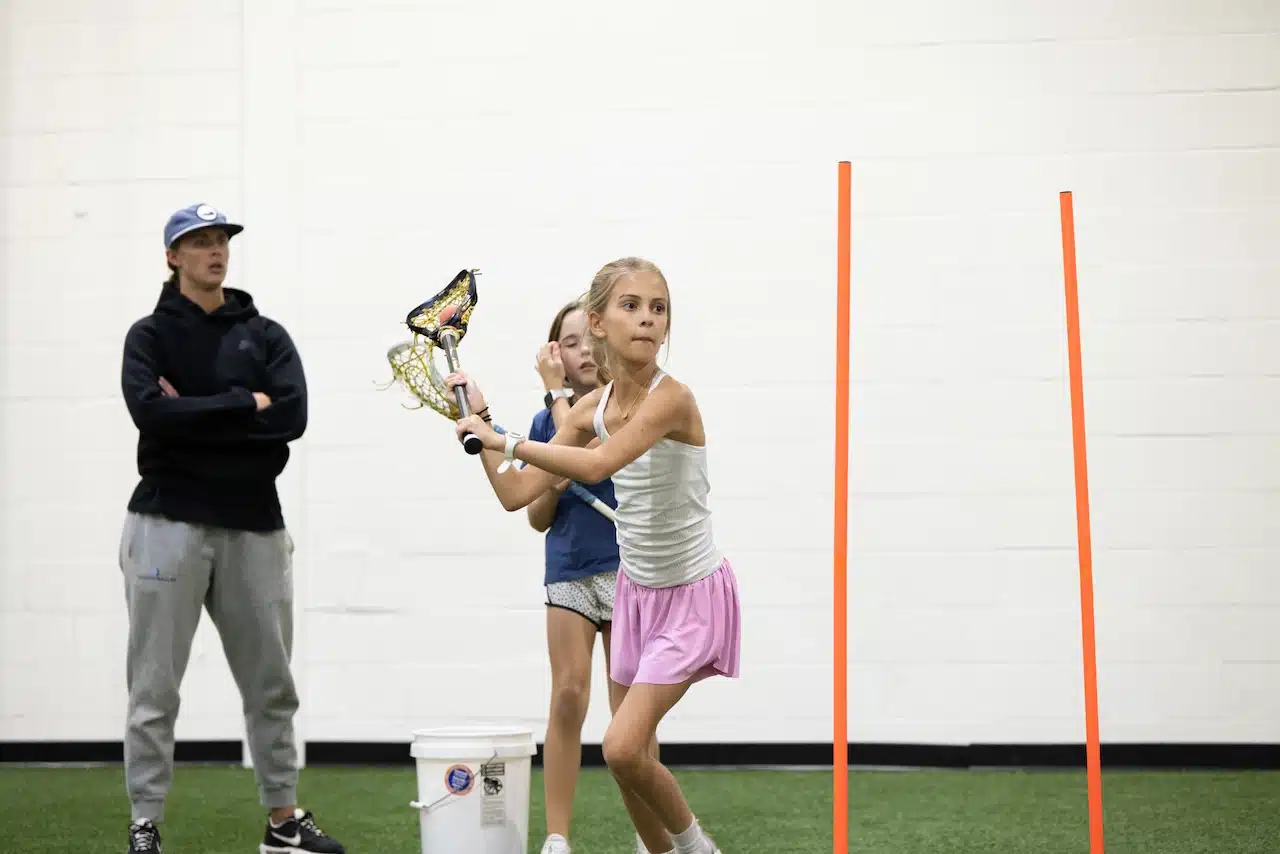
Drill 3: Cradling While Moving
Start by having the athlete cradle the ball while walking. Once comfortable, progress to jogging and then sprinting. Add in cones or sticks for them to weave through to enhance coordination and spatial awareness. This drill isn’t just about mechanics – it’s about mindset.
Cradling becomes second nature when athletes begin to see the stick as an extension of themselves, not a separate tool to manage. That sense of control builds confidence and reinforces self-belief.
Drill 4: Partner Passing with Movement
Pair athletes up and have them pass and catch while constantly moving – changing angles, speeds and directions. This foundational drill builds coordination, timing, and communication – echoing the dynamics of real gameplay.
Adding movement introduces challenge and realism. As players learn to successfully pass and receive on the move, they begin to trust their abilities under pressure – boosting both skill and self-belief.
Drill 5: Shooting Progressions to Build Accuracy and Confidence
Begin with stationary shooting to lock in fundamentals, such as footwork, stick positioning, and target focus. Once the basics are solid, progress to dynamic shooting drills such as “Showdown” or “Snake Shooting,” which combine movement, cutting, and finishing on the move.
As accuracy improves, athletes see immediate, tangible results – boosting their confidence, reinforcing their skills, and making training more fun and rewarding.
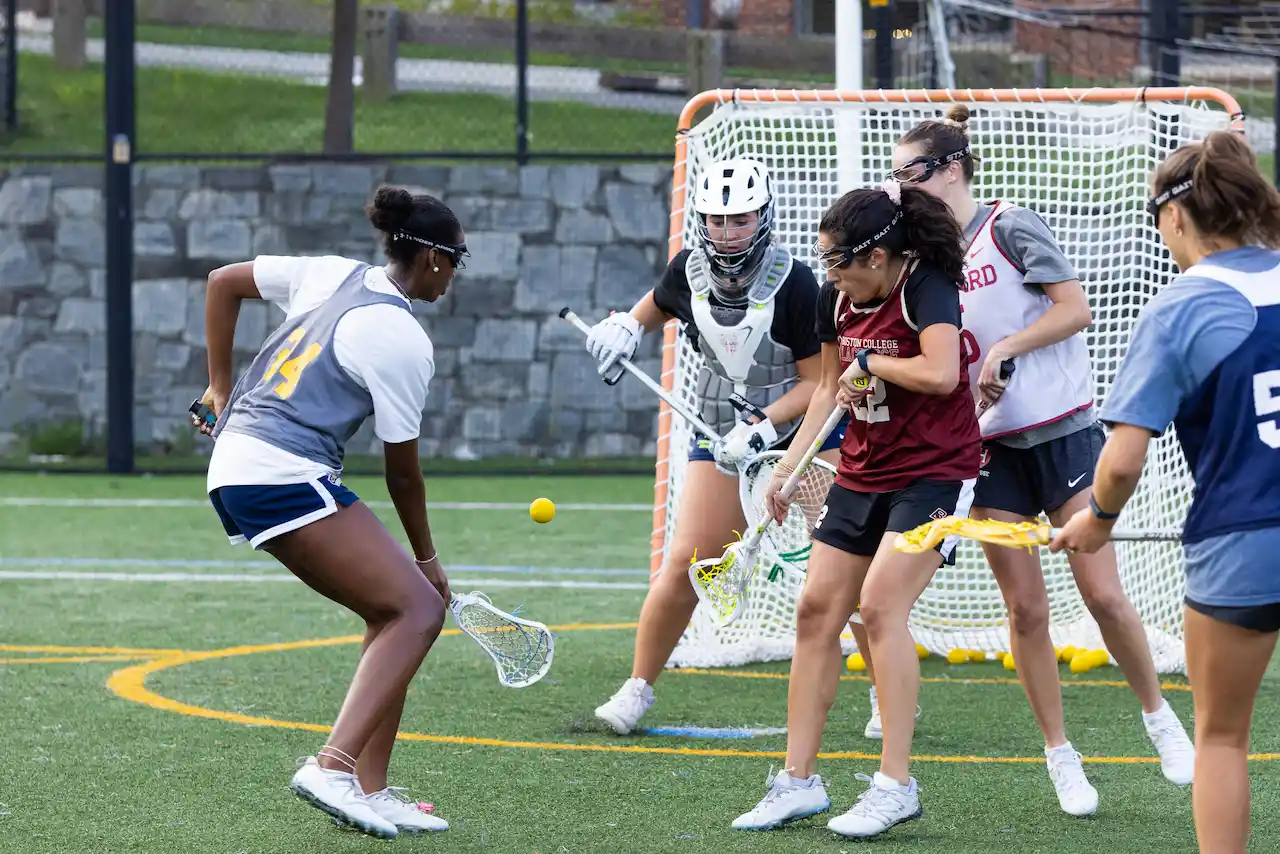
Drill 6: Game‑Style 1‑vs‑1 or Small‑Sided Scenarios
Introduce a simple 1v1 or 2v2 setup – starting with a ground ball or scoop, followed by a dodge and shot. These small-sided drills combine skill execution with decision-making under pressure.
These game-like reps help athletes bridge the gap between practice drills and real match situations. When young athletes succeed in these scenarios, they build the confidence to step into real games, feeling prepared and capable.
4. How Skill + Confidence Interlink
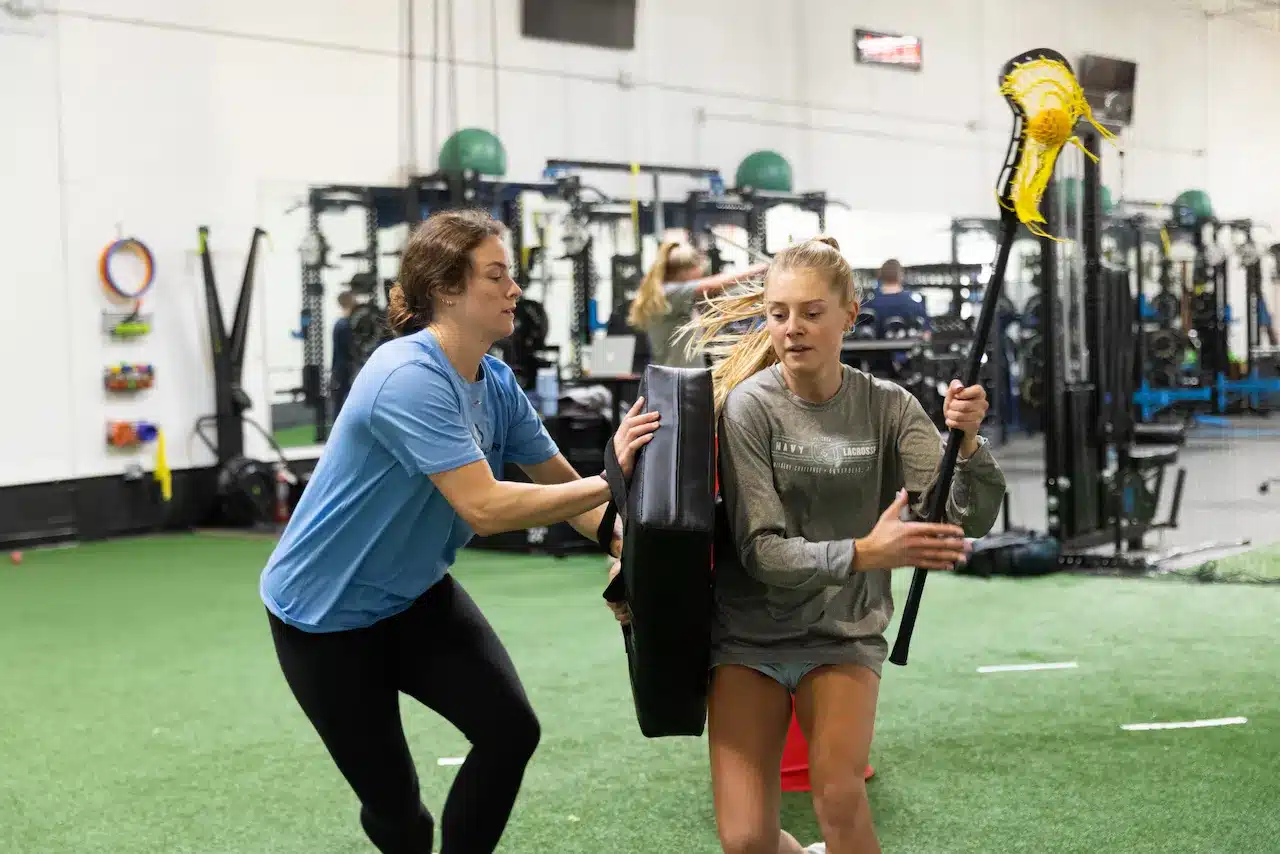
Each of these drills is more than “fun practice” – they follow a progression that builds competence, resilience and self‑belief over time. Here’s how:
- Mastering competence through repetition (e.g. wall ball) makes the athlete think: “I can do this.”
- Facing challenges and overcoming them (e.g. ground ball relay) builds resilience.
- Coach feedback and recognition (our Healthy Baller coaches are former athletes themselves) reinforces the athlete’s belief.
- Transferring the drill success into game and life (their decision‑making improves, they trust themselves) magnifies the effect.
Early Skills. Lifelong Confidence.
Research into youth lacrosse and skill development shows that early focus on fundamentals and consistent repetition lays the groundwork for stronger engagement and long-term participation in the sport.
When that foundation is paired with a supportive, expert-led environment, such as the inclusive culture at all our DC, Maryland, and Virginia training centers, it results in more than just skill growth. It builds lasting confidence.
5. Structuring Lessons for Beginners
In our lacrosse training programs for beginners, here are the key aspects we emphasize:
- Warm‑Up & Movement Quality: Ladder drills, dynamic warm‑ups, coordination and footwork.
- Technique Block: Wall ball, cradling, passing/catching, with clear cues and mirror drills.
- Skill Block: Ground ball relay, partner passing, shooting progression.
- Controlled Scrimmage or Scenario: 1v1, small sided, fun challenge.
- Cool Down & Reflection: Reinforce what went well, what to improve and celebrate wins.
- Feedback Loop: Coaches monitor progress, keep detailed session notes, and show clear improvement metrics by tracking reps, movement quality etc.
- Culture & Confidence Talk: We remind young athletes that each rep is building their belief, that mistakes are part of growth, and that they are athletes who belong.
With this layered structure, we believe that beginners don’t feel overwhelmed; but they feel guided, safe and motivated.
6. Confidence Beyond the Field
We have seen it time and again that when beginners learn the necessary skills and begin to see improvement, their confidence rises, both on and off the field. As a result, they bring better self‑belief into school work, team dynamics, friendships and decision‑making.
Developing the Whole Athlete
We emphasize inclusive training for all ages and backgrounds – regardless of sport or experience level. Because when a beginner learns to cradle or shoot with confidence, that progress often sparks something bigger. Suddenly, they’re raising their hand in class, stepping up in group settings, and facing new challenges with a “can-do” mindset.
We believe that training is not just about the drill – it’s about who they’re becoming in the process.
7. What the Research Says: Why Beginner Drills Matter
Behind every confident young athlete is a strong foundation – and the science backs it up. Research into youth lacrosse and athletic development consistently highlights that early skill-building, when paired with fun and structure, leads to better outcomes both on and off the field.
Here are some key insights:
- Fundamentals First: Beginner drills that emphasize repetition – such as passing, cradling, and shooting – help build muscle memory and field awareness. These basic skills, practiced consistently, allow young players to progress with greater confidence and control.
- Movement Quality Matters: Footwork, coordination, and balance aren’t just athletic bonuses – they’re essentials. Movement-focused training enhances physical literacy and helps reduce injury, especially in younger players who are still developing body awareness.
- Fun Fuels Long-Term Engagement: When drills are engaging, age-appropriate, and enjoyable, young people are more likely to stick with the sport. A sense of competence early on keeps them motivated and invested over the long haul.
- Progress Builds Confidence: At Healthy Baller, we don’t leave progress to guesswork. We track performance so athletes can see their improvement week after week. That visibility gives them a real-time boost, which is a crucial ingredient for any developing athlete.
How to Get Started
Looking to boost your lacrosse skills while having fun along the way?
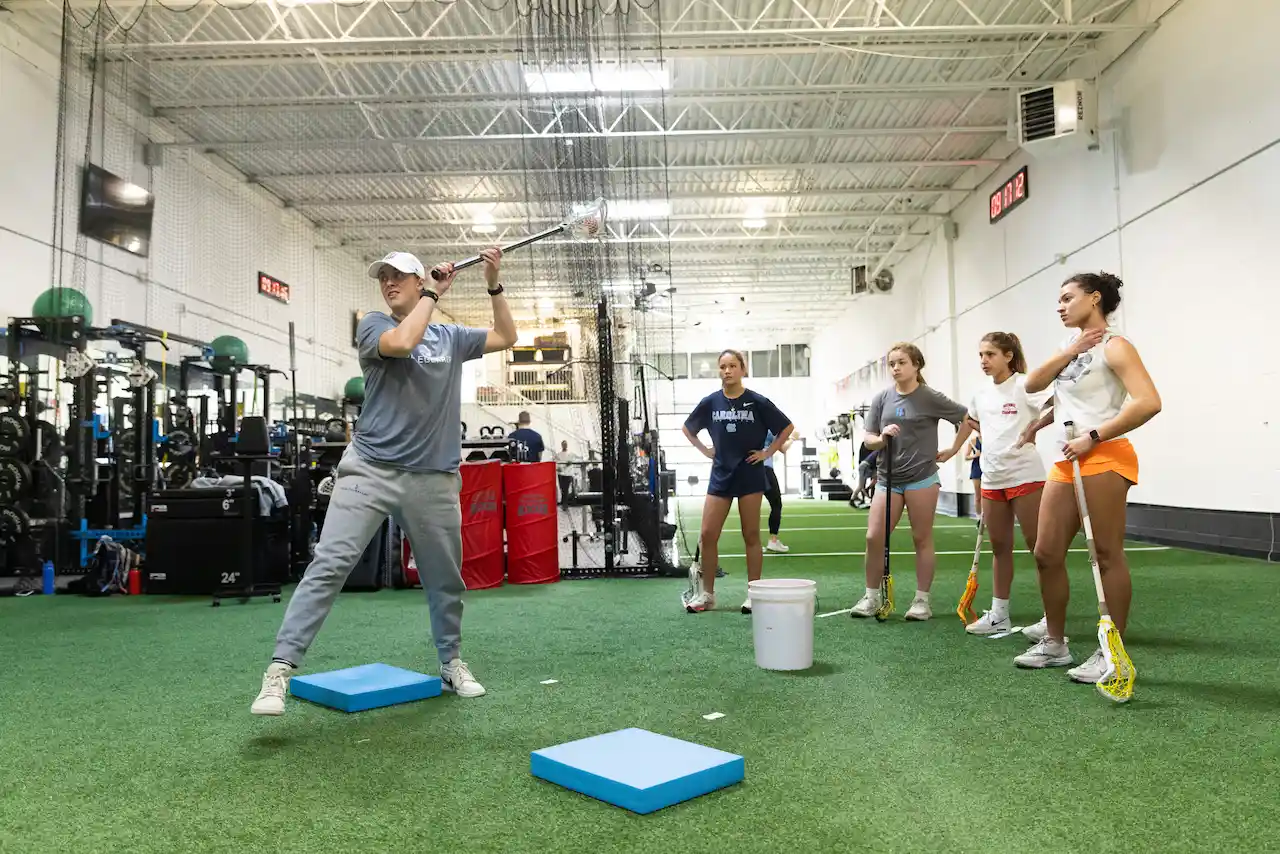
Our custom lacrosse training programs -available at our Alexandria and Rockville centers, reviewed by Google as “the top training spots for lacrosse players” – cover all positions, from offense and defense to midfield and goalie.
Whether you’re cradling for the first time or aiming to level up, we’ll help you sharpen your technique, improve your overall skills, and become a more confident player.
Reach out to us today and let’s get you started with performance-driven training that builds confidence and keeps the game fun.