In youth athletics, confidence is as critical as any physical skill. A young player who believes in their body, in their progress and in their capacity to improve can perform, recover and grow more resiliently than one who doubts every move. At Healthy Baller, we believe performance training isn’t just about speed, strength or agility but about helping athletes develop self-belief, leadership and holistic growth that carries far beyond the game.
In this post, we will discuss how a well-designed performance training program builds confidence both on and off the field, and how we structure training to deliver that kind of transformation.
1. Why Confidence Matters in Sport – And in Life
Confidence in sport, sometimes referred to as “sport-confidence,” is more than just feeling good – it’s the belief that one can perform under pressure, adapt to challenges and bounce back from mistakes. This mindset flows into school, social settings and self-identity.
The Science of Confidence in Young Athletes
Research consistently shows that self-confidence serves as a protective buffer against anxiety, perfectionism and negative self-talk in youth athletes. In fact, studies highlight that young people who participate in regular sport – particularly team sports – report higher levels of self-esteem and overall mental well-being.
Confidence, however, isn’t fixed; it naturally fluctuates with performance, environment and pressure. That is why well-structured coaching, consistent feedback and positive validation are essential. As Frontiers for Young Minds notes, these elements help stabilize confidence and create the foundation for growth both in sport and beyond. Because when athletes believe in themselves, they take more initiative, recover better from mistakes and are more willing to push their limits.
2. How Performance Training Builds Lasting Confidence
How does training in the weight room, on the field, or even in mobility work translate into a stronger mindset? Here are some key pathways:
Mastering Competence Through Progress
Every small win – from locking in better form, hitting a new conditioning mark, or increasing control – reinforces that the athlete is improving. That incremental feedback (= “you’re getting better”) automatically strengthens self-belief.
As performance coaches, we make detailed notes from every session to monitor progress. Some of these details include: number of reps, weight, quality of movement, jump height/distance, sprint speed, distance covered in a specific amount of time, and the list goes on.
We believe testing is an essential part of a quality training program, both to monitor progress and to evaluate the effectiveness of the current program on the desired training response.
Overcoming Challenges and Building Resilience
Training presents obstacles – mastering technique, fatigue and adaptation. Overcoming those challenges sends the message: “I can endure, adapt and grow.” That resilience doesn’t stop at sports – it naturally grows into confidence in school, social situations and other aspects of life.
Feedback, Recognition & Coaching Relationship
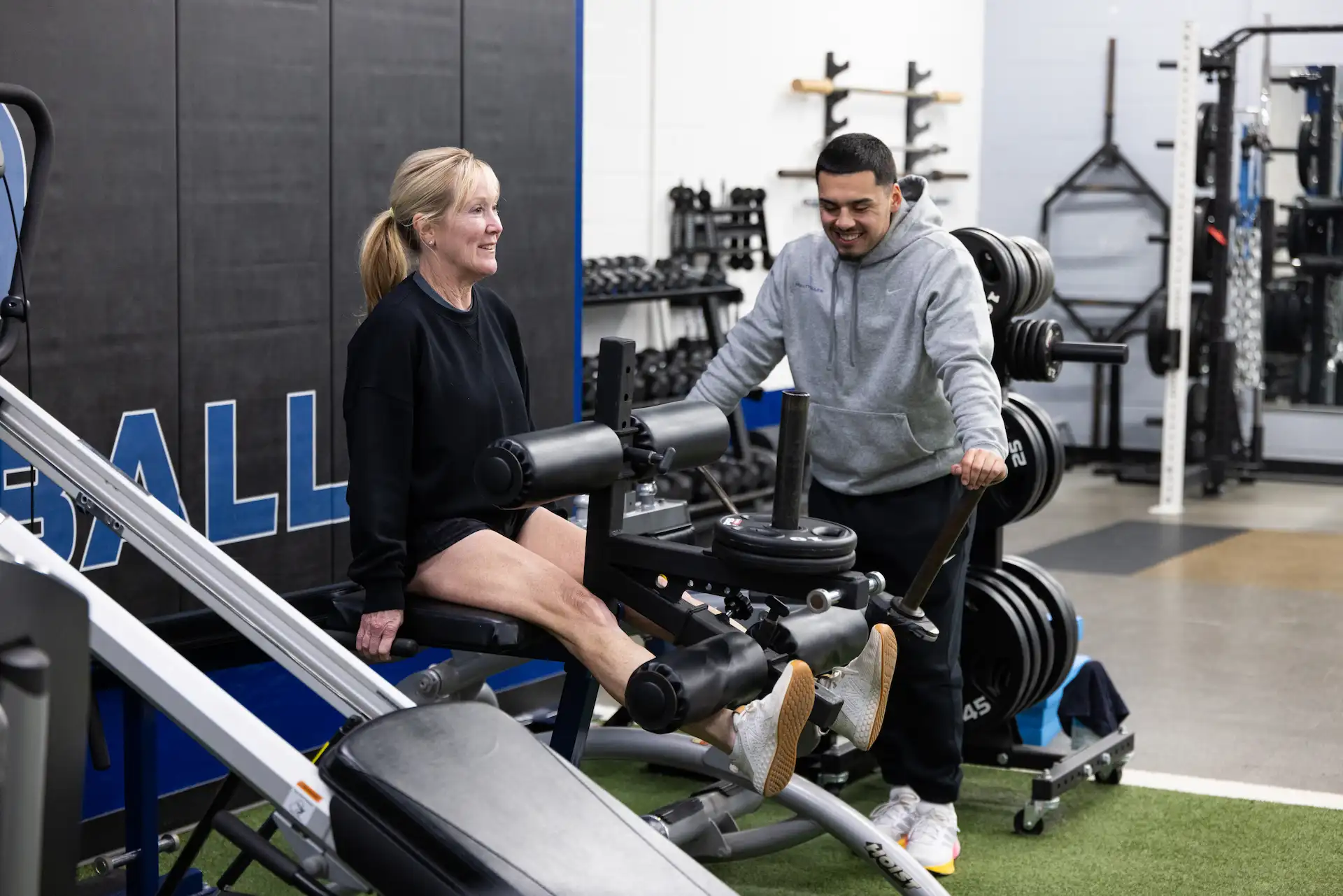
When coaches act as role models, give specific, credible feedback and genuinely celebrate effort and growth, that external recognition supports internal confidence in youth athletes. Our coaches are part of that model – not only serving as mentors and mirrors, but also as former athletes themselves who understand the challenges firsthand, and know what it takes to build both performance and confidence.
Transfer to Competition & Daily Life
When an athlete feels stable under load in training, it helps them feel steadier under stress in games. That translates into better composure, better decision-making and self-trust under pressure. This belief also carries into life – the ability to face adversity, set goals and push through self-doubt.
3. The Healthy Baller Philosophy
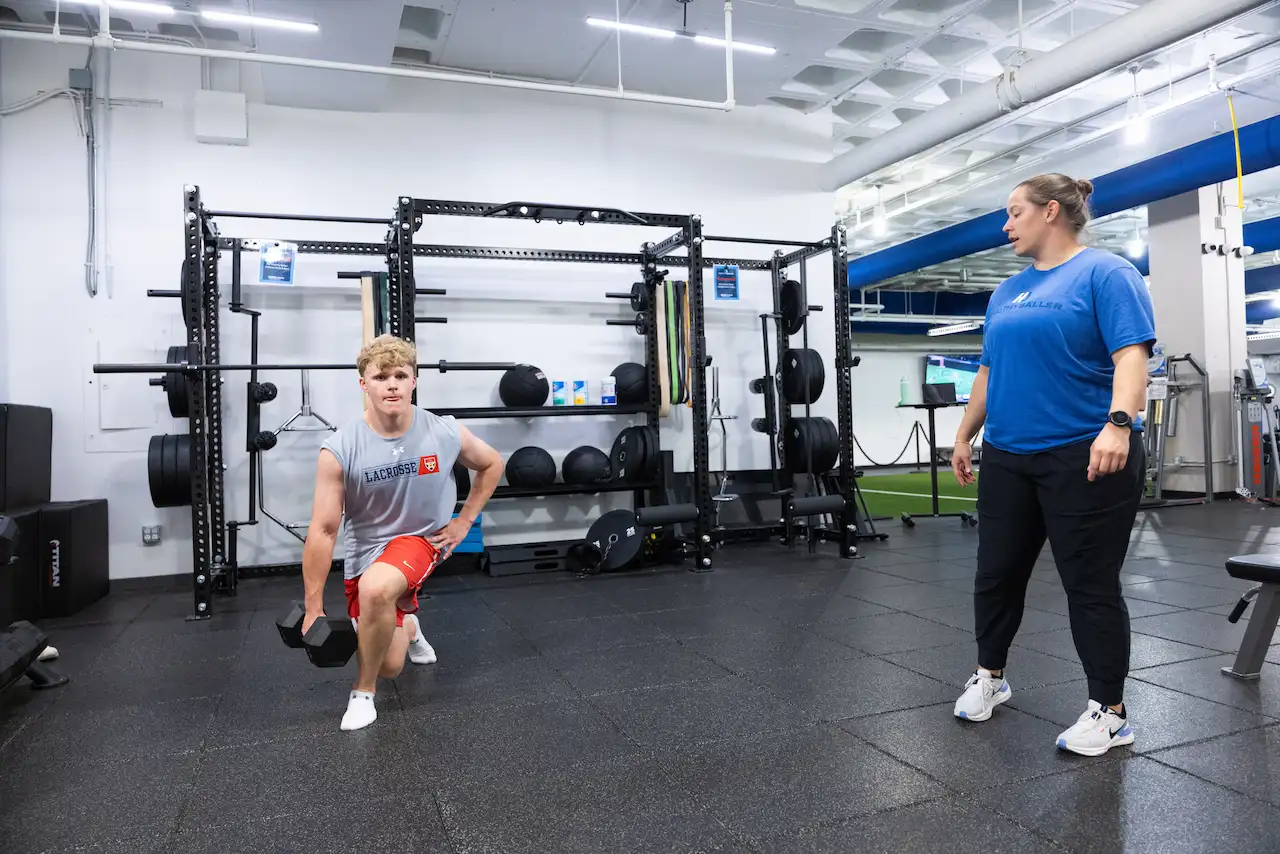
At our training centers, confidence isn’t an afterthought – it is built intentionally. Everything we do is designed to help athletes grow stronger in body and mind, and the results speak for themselves. For example, a lacrosse athlete at Healthy Baller shared that beyond speed and strength gains, the training “significantly impacted my attitude and state of mind during games”
That kind of transformation – where physical progress directly fuels confidence and composure – is exactly what we aim to deliver.
These are some of the ways we embed that in training:
- Holistic Development: We don’t only train the body. We plan for recovery, movement, mindset and overall athlete quality. “Our team’s holistic approach means you’ll grow as an athlete, a teammate, and a person – both on and off the field.”
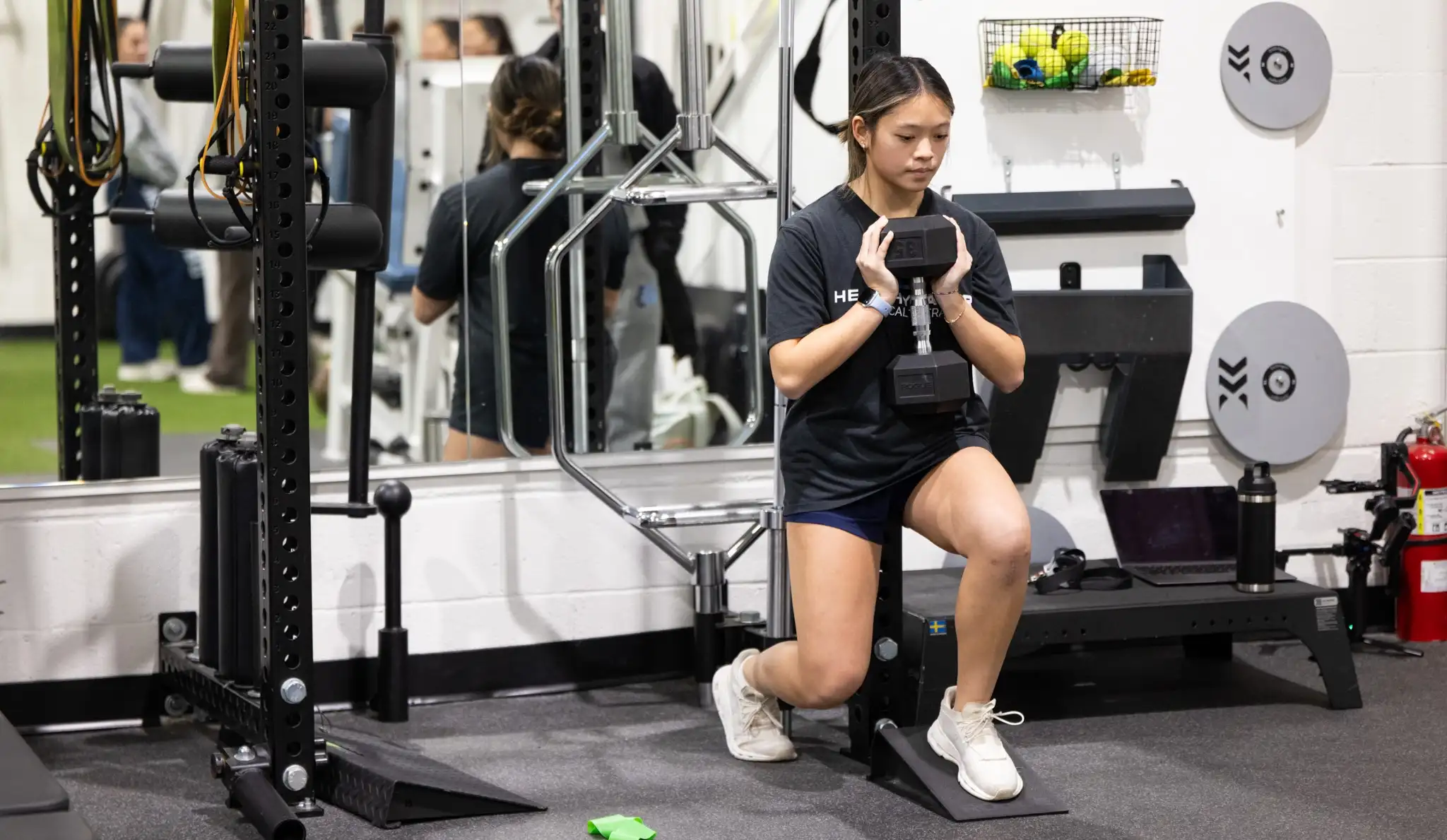
- Safe, Progressive Programming: Athletes develop at their pace – movement quality first, then load. This minimizes injury, builds trust in one’s body and reinforces consistency.
- Culture of Growth & Connection: We emphasize relationships, accountability and respect. Athletes see coaches and peers as partners, not just task-masters.
- All Sports, All Levels: Healthy Baller trains athletes across disciplines, so young people see that confidence is not about being a superstar in one sport but it extends beyond sports into daily life
- Visible Milestones & Tracking Progress: We “monitor progress” openly. Athletes see their improvement, which becomes a tangible confidence boost.
- Role Modeling & Coaching Leadership: Many coaches act as daily role models. The mentor-athlete relationship is foundational to self-belief.
- Developing people first, athletes second: We believe there is a heavy social component to our training sessions. We want our athletes interacting with other athletes, especially ones they do not know. This teaches them how to start organic conversations, support their peers, and grow the Healthy Baller community. In return they receive the same treatment from their peers and leave HB carrying themselves with more confidence.
4. Key Elements of Training That Drive Confidence
Let’s take a closer look at the training elements that go beyond building muscle to fostering lasting self-belief.
Movement Mastery Before Load
Before heavy lifts, we teach hinge, squat, push, pull, carry and integrated patterns. This way, athletes become fluent in their bodies, reducing compensations and fostering trust. They are given specific cues during every session – then asked to walk our coaches through the same cuing to demonstrate their understanding and mastery of any specific movement pattern.
Progressive Overload + Variation
We introduce challenges gradually, with enough variety to avoid stagnation and mental fatigue. Athletes don’t plateau mentally because they always have a new goal that is within reach. We add variation to lead to new adaptation in the body.
Instilling Ownership & Autonomy
Athletes contribute to goal setting, tracking and reflection. This active role reinforces: “I’m part of this; I own my growth.” Our athletes have an active role in their training sessions. They are required to make decisions on specific exercises with the goal of improving motor learning and decision making.
Constructive Feedback & Positive Reinforcement
Feedback is specific – “You lengthened your stride here, good job” – rather than generic. Praise is directed at effort, process and consistency. This nurtures a growth mindset in youth athletes. On the opposite side of the spectrum, we work hard not to overcoach. We see too much paralysis by analysis with athletes trying to chase “perfect form”. We want to see them get out of their way and execute. Sometimes that involves watching without cuing, when the situation is appropriate.
Challenge Under Safe Conditions
Game-like drills, tempo shifts, fatigue work – all happen under supervision. When an athlete performs under constrained stress in training, they internalize: “I can manage pressure.”
Mentorship & Communication
At our training centers, coaches don’t just instruct – they ask, listen and debrief. When an athlete knows their coach believes in them, that external belief becomes internalized.
5. How Confidence Shows Up in Sports Performance
Confidence built through training shows in tangible ways, such as:
- Decision-Making: Less hesitation, more assertiveness in choices (passing, attacking, defending).
- Consistency: Fewer slumps. Athletes rebound faster mentally from poor plays.
- Adaptability: When a game plan breaks, confident players adjust rather than panic.
- Leadership: Confident athletes often emerge as leaders – they vocalize, guide teammates and model composure.
- Resilience to Setbacks: Knocked down? They bounce back. That kind of mental toughness is grown in training.
6. Confidence Off the Field
One often overlooked strength of athletic confidence is how it spills into non-sporting life:
- Academic Grit & Discipline: The habits of consistency, goal setting, time management in training all help in studying and school.
- Social Leadership: Confident athletes often become role models in peer groups – they lead, inspire and mentor.
- Emotional Regulation: They’ve practiced responding to failures in training. This carries to how they deal with challenges in life, such as rejection, competition and stress.
- Self-Worth Beyond Wins: Training teaches that value isn’t binary (win/lose). Growth, effort, resilience become core identity anchors in youth athletes.
- Health & Lifestyle: Confidence in physical ability encourages athletes to make positive lifestyle choices – whether that means better sleep, balanced nutrition, or consistent recovery.
7. What the Research Confirms
As mentioned above, recent research underscores the powerful role performance training plays in building confidence. A 2024 study found that self-confidence helps buffer the negative effects of perfectionism and anxiety on performance, allowing athletes to avoid overthinking and play with greater freedom. Long-term studies also show that early participation in sport is linked to higher self-esteem and better psychological well-being in adulthood.
The Risks of Early Sport Specialization
It is worth noting that research cautions against early sport specialization, which is linked to higher risks of burnout, anxiety and isolation. In contrast, a balanced training approach fosters confidence while helping to minimize those risks.
8. Confidence is Not an Accident
Confidence isn’t something that happens by chance – it is built through consistent guidance and reinforcement. When athletic training is purposeful, comprehensive and grounded in strong values, it develops not only stronger bodies but also stronger minds. Our goal goes beyond producing better athletes – we aim to nurture self-belief, character and lasting growth. Because when a young athlete leaves the field with confidence, they carry that foundation into every chapter of their life.
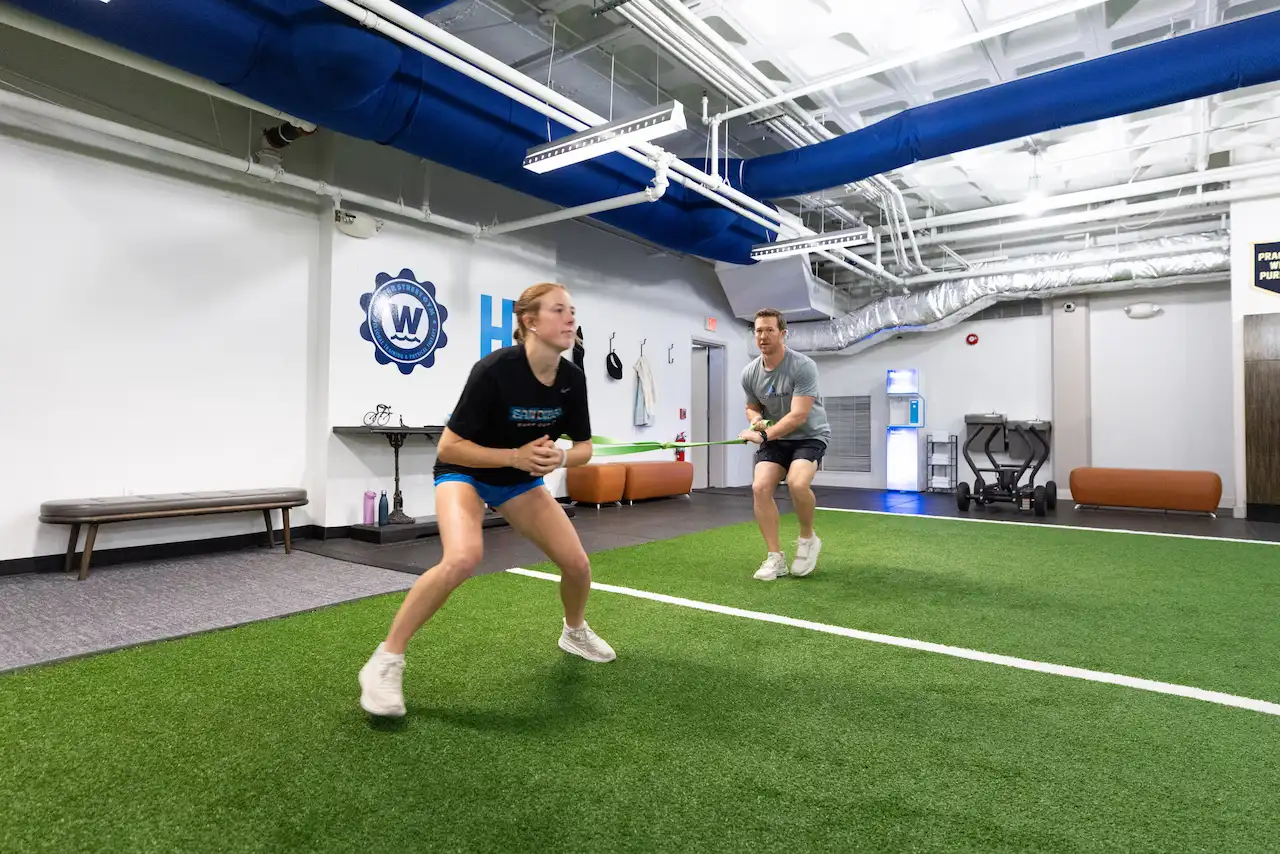
Getting Started with Confidence-Driven Training
If you’re curious about how to bring this kind of training to your athlete, we’d love to show you what it looks like in person. Reach out to us, try a movement evaluation, and let’s build confidence together – on and off the field.
Expert-Led Training Across the DMV
We have training centers in Rockville, Alexandria, DC, Fairfax and Reston, and we work with athletes from all sports and levels.
Our environment is safe, individualized and expert-led; a place where role models monitor progress, offer feedback and inspire young people to lead both on game day and in life.